


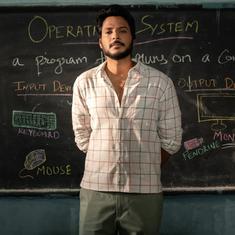







‘Nothing objectionable’: Bombay HC allows theatrical release of film on UP CM Adityanath’s life
The Central Board of Film Certification had refused to clear the film, claiming that it could be defamatory to the Bharatiya Janata Party leader.

The Bombay High Court on Monday permitted the theatrical release, without any edits, of a Hindi language film based on the life of Uttar Pradesh Chief Minister Adityanath, The Indian Express reported.
A bench comprising Justices Revati Mohite Dere and Neela K Gokhale said that there was nothing objectionable in the film titled Ajey: The Untold Story of a Yogi. The movie is based on the book The Monk Who Became Chief Minister: The Definitive Biography of Yogi Adityanath by Shantanu Gupta.
The producers of the film, Samrat Cinematics India Pvt Ltd, had approached the court after the Central Board of Film Certification recommended cuts and edits to the movie. In response to the petition, the High Court set aside the orders passed by the film certification body, Bar and Bench reported.
At first, the Central Board of Film Certification had raised 29 objections to the film.
On appeal, a revising committee on August 17 struck down eight of the objections, but still refrained from issuing a certificate to the movie.
After the filmmakers approached the High Court, the judges watched the movie on August 22, Bar and Bench reported. They said that no changes were needed.
“We have seen the movie in its context, and we don’t see that anything needs to be re-edited,” the court told the film certification body. “We have paused at every point you flagged. We have noted everything. We don’t find anything objectionable.”
The lawyer for the Central Board of Film Certification, Ram Apte, argued that the film was potentially defamatory towards the Bharatiya Janata Party leader, The Indian Express reported.
Samrat Cinematics, represented by lawyer Ravi Kadam, said that the certification body had sought a no-objection certificate from the Uttar Pradesh chief minister as a condition for clearing the film.
Kadam argued that the board had overstepped its jurisdiction by demanding a no-objection certificate from a private individual.
The filmmakers had already included a disclaimer saying that the film is fictional and inspired by real events.
The court suggested that the Central Board of Film Certification could ask for an addition to the disclaimer.
“There can be one word added ‘creative freedom’,” the court said. “This is alright. This covers everything.”
